Little Bighorn Battlefield and American Mythology
By Jim Harris
One of the many exciting things about the study of American history is the accessibility of so much information nearby for most residents in the nation.
For instance, this past August 8 and August 9, 2026, I left early one morning from my home in Southeastern New Mexico, drove all of one day, slept that night in a free riverside campground in Douglas, Wyoming, and woke up on Friday morning for a short drive to the Little Bighorn Battlefield (LBB) historic site in Crow Agency, Montana.
The LBB is a federally designated National Monument, and a part of the United States National Park Service, which is a division of the Department of Interior.
Because of its wide popularity in folklore, literature, motion pictures, television, and popular culture in general, the Little Bighorn Battle has been known by a number of names over the years. Indeed, it has become part of America’s frontier mythology. Many have called it by other names, including the “Custer Battlefield,” the “Battle of Greasy Grass,” or the site of “Custer’s Last Stand.”
The National Monument memorializes one of the last armed efforts of the Northern Plains Indians to preserve their ancestral way of life. On two hot days in 1876, June 25 and June 26, more than 260 US soldiers were killed by an army-size gathering of several thousand Native Americans warriors, members of the Lakota and Cheyenne tribes.
Among the many dead were Lt. Col. George Armstrong Custer and every member, save one, of the soldiers under his immediate command. In his troops were Custer’s two brothers, a nephew, his brother-in-law, and many solders and scouts who had served with him for years in the Civil War and the following wars with Indians on the American Plains.
By every standard, the battle was a total massacre. That was the word used by Private Thomas Coleman who surveyed the battlefield in the first days following the battle in the valley of the Little Bighorn River. Coleman’s exact words written down for a book he wrote were the following:
“There the bravest general of modern times met his death with his two brothers, a brother-in-law and nephew not 5 yards apart, surrounded by 42 men of E Company. Oh what a slaughter, how many homes made desolate by the sad disaster everyone of them were scalped and otherwise mutilated but the General he lay with a smile on his face.”
Not all US soldiers or historians continued to call Custer the “bravest general” following an analysis of the battle. Many, such as the future US President, General Ulysses S. Grant, called Custer hot-headed, headstrong with little regard for his military superiors, and a man who believed he had all the right answers to matters personal, national, and military. By just about every military man around him, soldiers, trackers, and aids, Custer had been warned not to go into the valley of the Little Bighorn River where Indian warriors were waiting for him in overwhelming numbers.
Custer lost not only soldiers and relatives, he also lost his life and the hopes and dreams he had of becoming the ultimate American hero.
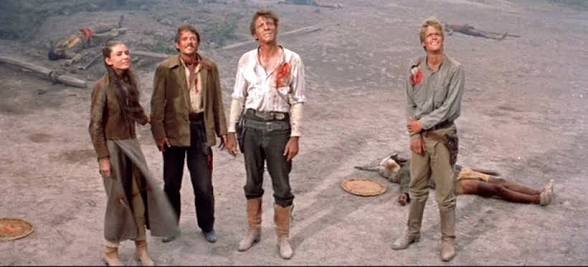
What he did accomplish was to be the central figure and protagonist in what became the most talked about and written about battle in all of American history. Literally, thousands of books and paintings have depicted the extreme violence on the battlefield. Custer’s Last Stand, or Last Charge, or Last Rally, has been the subject of dozens of novels and movies. No other battle, even in the Civil War, World War I, or WW II, has received as much attention.
As an illustration of its popularity with the public, in 1884 artist Cassilly Adams painted one detailed version of the battle. It was printed as a lithograph in 1896 by the Anheuser-Bush Company, and it was displayed in hundreds of bars across America. Copies of it have continued to be seen in such locations, and in galleries and homes since then. In recent years, original copies have sold for over a million dollars.
Over the past 150 years what happened at the LBB has become part of American mythology, a single event in the country’s settlement of the West that ranks with such myths as those about General Washington, Paul Revere’s Ride, President Lincoln, the attack on Pearl Harbor by the Japanese, Davy Crockett, and more recently the assassinations of President Kennedy, and Martin Luther King.
Simply defined, a myth is a story based in historic reality that has taken on epic proportions in how people view the plot and subject of the narrative. As we would say today, a myth is a story on steroids. For example, as metaphor a myth reaffirms beliefs, as how US military leaders and historians did during the Viet Nam War describing the fighting as a “cowboy and Indian” story.
Two writers who have had considerable influence in my perception of the 1876 events at the LBB are the historian Richard Slotkin and the novelist Larry McMurtry. Slotkin’s book is titled “The Fatal Environment: The Myth of the Frontier in the Age of Industrialization, 1800-1890,” which was published in 1985. McMurtry has two books on the subject, “Oh What a Slaughter: Massacres in the American West, 1846-1890,” published in 2005, and “Custer,” published in 2012.
Why was my 2026 trip to LBB, a place I have visited several times, such a moving experience? How could it continue to be a place I want to know more about?
For one thing, 2026 is the 150th anniversary of the massacre. As we are celebrating 250 years since the founding of our nation, we are marking the passages of a century and a half since the sad and tragic event of LBB. The year Custer died, Americans were celebrating the American Centennial. Just after its opening in Chicago on July 4, 1876, visitors there were shocked to learn of what had happened to Custer and his soldiers in the northern plains. A country that had just concluded a bloody Civil War was now astonishingly experiencing more bloodshed. It was to the nation at that time what Pearl Harbor and Nine-Eleven were to contemporary America.
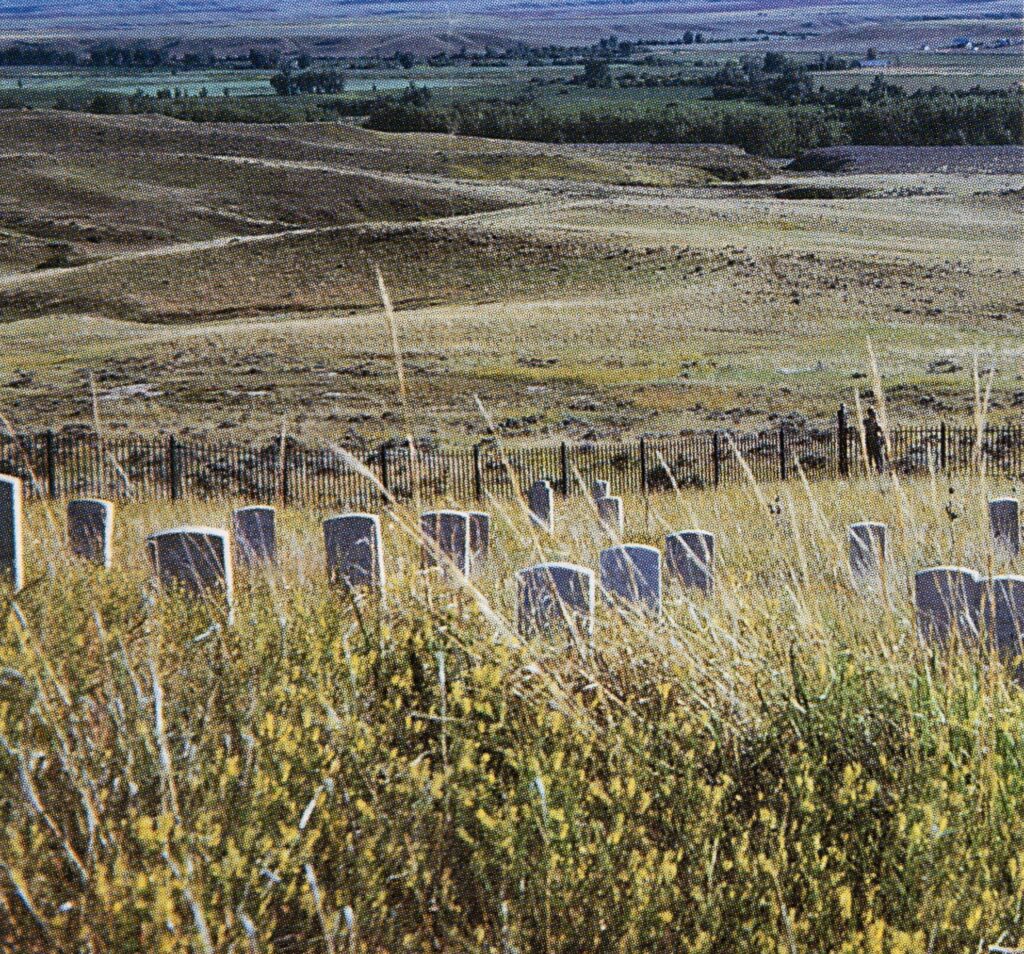
However, in addition to the shock of reading of the LBB massacre, the land of the battlefield to me feels pregnant with magic and mystery. It is a cemetery, and it is a cemetery with American flags flying. The LBB is not only a spiritual site for the Native American tribes who fought one of their last battles there. It is also a national cemetery for the many other ethnic and traditional cultures that fought against the original people of the plains.
Being at LBB brings up religious questions from other gravesites of grief in various corners of the plains, those at Wounded Knee in South Dakota, and Sand Creek in southeastern Colorado. The massacre at Wounded Knee took place in 1890 and the Sand Creek took place in 1864.
I think of LBB as sacred ground for all Americans.
Over the last 50 years of visiting with and interviewing pioneer men and women whose grandparents and great-grandparents remembered their own stories of family encounters with Indians of the Southern Plains, I will never forget their personal stories of a different time in the land that is my home. Some of these are stories that make American history seem like a long-running cowboy and Indian story.
Today walking and driving over the many acres of the Little Bighorn Battlefield, I want to take off my hat and put my hand over my heart.
To conclude, I want to mention a couple of ideas Larry McMurtry had about why massacres happened so much in the history of the West. First, he feels the language differences between the whites and the Indians were often a huge problem that foreshadowed bloody conflicts. Both groups were often confused about what was really being said in most exchanges, especially the discussions over treaties and giving up land.
Second, the apprehensions that many pioneers brought with them on their journeys west had to be a major obstacle in understanding each other. Most explorers, trappers, and pioneers heard dozens of horror stories about what Indians were doing in the West.
Finally, in his book “Fatal Environment,” Richard Slotkin asks, “Why has this constellation of American stories, fables, images been for so long one of the primary organizing principles of our historical memory?” And he answers, “Myths are stories, drawn from history, that have acquired through usage over many generations a symbolizing function that is central to the cultural functioning of the society that produces them. These formal qualities and structures are increasingly conventionalized and abstracted, until they are reduced to a set of powerfully evocative and resonant ‘icons’—like the landing of the Pilgrims, the rally for the Minutemen at Lexington, the Alamo, the Last Stand, Pearl Harbor, in which history becomes a cliché.”